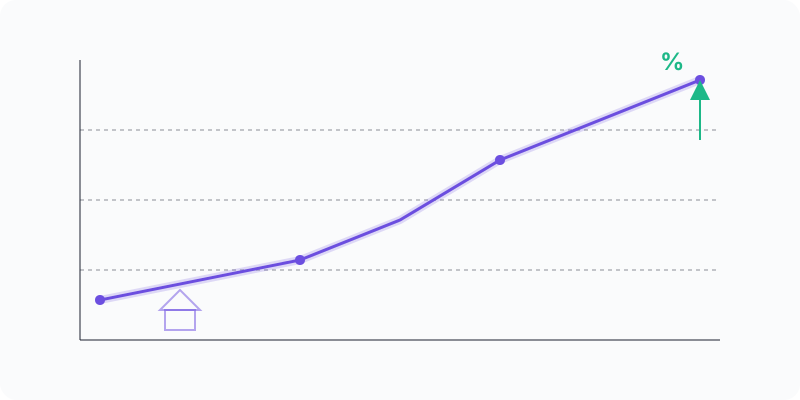
If you've been paying attention to the news lately, you've probably noticed the Federal Reserve isn't letting up. After another 25 basis point hike this month, the federal funds rate now sits at 4.5% to 4.75%—the highest it's been since 2007. And if you're in the market for a home or carrying any kind of debt, this matters more than you might think.
What's Actually Happening
The Fed's aggressive rate hikes are designed to combat inflation, which peaked at 9.1% last June and has since cooled to around 6.4%. The problem? Borrowing costs have skyrocketed in the process. The average 30-year fixed mortgage rate hit 6.65% this week, according to Freddie Mac. Compare that to 3.69% exactly one year ago, and you start to see the picture.
For a $400,000 home with 20% down, that rate difference translates to roughly $580 more per month. That's not pocket change—it's a car payment, or a year of groceries, or half your kid's college fund.
Try the Mortgage Calculator →
Auto Loans Aren't Immune Either
The average new car loan rate has climbed to 6.58% for borrowers with prime credit, per Bankrate. A year ago, it was 4.07%. On a $35,000 vehicle financed over 60 months, you're looking at about $55 extra per month. That adds up to $3,300 over the life of the loan that's going straight to interest.
If you're shopping for a car right now, consider whether you can put more down to offset the higher rate, or look at certified pre-owned vehicles to keep the principal lower.
Try the Auto Loan Calculator →
Credit Cards: The Silent Killer
Here's the one that really hurts: credit card APRs have climbed to an average of 20.4%, according to the Federal Reserve's G.19 report. If you're carrying a $5,000 balance and making minimum payments, you're looking at years of payments and thousands in interest.
My advice? Prioritize paying down high-interest debt before it snowballs. Even an extra $100 per month toward your credit card balance can save you hundreds in interest over time.
What Should You Do?
Look, I'm not going to sugarcoat it: if you're buying a home or a car in 2023, you're paying more than you would have a year ago. But that doesn't mean you should panic or sit on the sidelines indefinitely. Here's my take:
- If you're buying a home: Run the numbers at current rates. If the payment fits your budget, the home isn't "too expensive"—it's just the cost of buying today. You can always refinance later if rates drop.
- If you have an adjustable-rate mortgage: Now's the time to consider refinancing into a fixed rate before your ARM resets higher.
- If you're carrying credit card debt: Make paying it down your top priority. A 20%+ APR will eat you alive.
The Fed has signaled more hikes are coming this year. Whether we see one or two more 25-point bumps, the direction is clear. Plan accordingly.
— David Kim, Mortgage & Real Estate Advisor