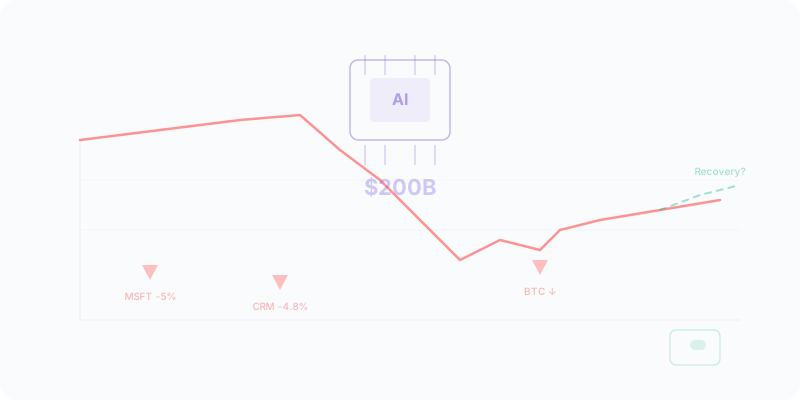
Wall Street had a meltdown yesterday. Microsoft dropped 5%. Salesforce cratered 4.8%. Bitcoin plunged to levels not seen since late 2024. The culprit? Amazon just announced it's spending $200 billion on AI infrastructure in 2026—and investors are asking the question everyone's avoiding: when do these companies actually make money from this stuff?
The AI Spending Spree Nobody Can Explain
Here's what's happening: every major tech company is in an arms race. Amazon, Microsoft, Google, Meta—they're all throwing hundreds of billions at AI infrastructure. The servers aren't cheap. The power consumption is insane. And the return on investment? Still theoretical.
Amazon's announcement triggered what Wall Street calls a "risk-off recalibration." Fancy words for panic selling. Investors who were cheerleading AI companies yesterday were suddenly asking: what if these investments don't pan out? What if we've overvalued stocks that are burning cash on speculative infrastructure?
The damage spread fast. When the Magnificent Seven stocks stumble, everything stumbles. But here's what happened next: the market already bounced back. By this morning, futures were green again—Dow futures up 0.4%, S&P 500 futures up 0.6%. The sell-off lasted maybe 24 hours.
This Is What Healthy Volatility Looks Like
Before you panic, remember this: what we saw wasn't a crash. It was a correction. A recalibration. Actual panic moves 20-30% in days. This was a 3-5% jolt that reversed itself faster than you can read this article.
If you have a diversified portfolio—which you absolutely should—you probably felt this as a blip, not a crisis. Stocks down, bonds slightly up. It's the system working exactly as designed.
But here's the real lesson: the market is telling us something important. It's saying that unlimited AI spending without demonstrated returns is worth questioning. That's healthy skepticism, not doom.
What This Means For Your Portfolio
If you're heavy in Big Tech, this is a wake-up call to rebalance. Not panic-sell. Rebalance. Check your portfolio allocation and ask yourself: am I overexposed to companies betting the farm on AI infrastructure?
The danger isn't that these companies will fail. It's that they'll succeed—but at growth rates lower than their current valuations assume. Microsoft and Google will make plenty from AI. The question is whether they'll make enough to justify stock prices that have already tripled in five years.
For most investors, the answer is to do nothing dramatic. Keep your asset allocation boring: 60% stocks, 40% bonds. Or whatever your timeline and risk tolerance dictates. Don't try to call tops or bottoms. The 24-hour reversal we just saw proves that even professionals can't do it.
What you should do: review your 401(k) contributions. Make sure you're not missing out on employer matches just because headlines are scary. Historical data shows that investors who panic-sold during tech corrections lost more money than those who stayed invested. The rebound comes too fast to time.
The Crypto Hangover
Bitcoin fell hard alongside tech stocks, dropping below $65,000—down from over $100,000 just months ago. The reason? Bitcoin moves with investor sentiment, and yesterday's sentiment was "I need to know what I'm paying for before I buy more."
If you're carrying crypto as a speculative position, this is a reminder: don't bet what you can't afford to lose. Bitcoin is not an alternative to retirement planning. It's a lottery ticket for those who can afford to lose the ticket price.
The Bottom Line
Amazon spent $200 billion. Microsoft and Google will match it. The market gasped. The market recovered. Tomorrow, we'll all find something new to worry about.
Your job isn't to predict the next correction. Your job is to stay invested through corrections, keep contributing to retirement accounts, and maintain a portfolio that's diversified enough to handle a 5% drop without requiring medication.
Run the numbers. Calculate how your monthly investments would compound over the next 30 years, even with volatility built in. Check whether your portfolio mix still matches your goals. Then stop checking stock prices for a week.