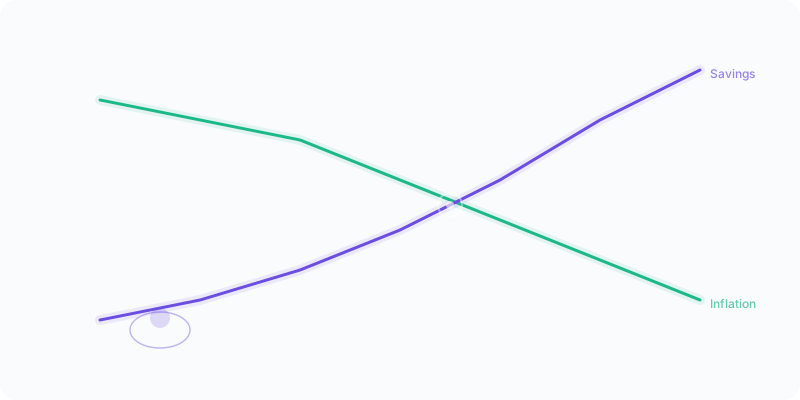
For the first time in over two years, we can finally talk about inflation without wincing. July's Consumer Price Index came in at 3.2%—still above the Fed's 2% target, but a far cry from the 9.1% peak we saw last summer. If you've been watching your retirement accounts nervously, this is the news you've been waiting for.
Your 401(k) Is Finally Catching Its Breath
The S&P 500 is up roughly 17% year-to-date, and the market's newfound stability means your retirement portfolio has likely recovered much of what it lost in 2022's brutal downturn. According to Fidelity's Q2 2023 report, the average 401(k) balance climbed back to $112,400—up 13% from a year ago.
But here's what I want you to focus on: this recovery isn't a signal to coast. It's an opportunity to accelerate.
Max Out While You Can
The 2023 401(k) contribution limit is $22,500 ($30,000 if you're 50 or older). If you haven't maxed out yet, now's the time to bump up your contributions. With inflation cooling, your dollars stretch further—and every dollar you contribute now compounds for decades.
Let's run some numbers: if you're 35 and increase your monthly contribution by just $200 (bringing you from $500 to $700/month), and earn a 7% average return, that extra $200 turns into $228,000 by age 65. That's not a typo.
Try the Retirement Calculator →
Don't Forget Your Emergency Fund
I know, I know—everyone's talking about retirement, but let me ask you this: do you have 3-6 months of expenses set aside? The Federal Reserve's latest survey found that 37% of Americans couldn't cover a $400 emergency expense without borrowing. Don't be part of that statistic.
With high-yield savings accounts now offering 4.5% to 5% APY, your emergency fund can actually earn meaningful interest while it sits there. That's a silver lining of the Fed's rate hikes.
Try the Savings Goal Calculator →
What About Retirees?
If you're already retired or approaching retirement, the cooling inflation is a relief for your withdrawal strategy. The IRS bumped RMD ages to 73 starting this year, giving you more time to let your investments grow before mandatory withdrawals kick in.
And if you've been nervous about the "4% rule," the improved inflation picture makes that benchmark look more sustainable. Run your own scenarios to see how different withdrawal rates affect your portfolio longevity.
Try the Withdrawal Rate Calculator →
The Bottom Line
We're not out of the woods yet—the Fed is holding rates at 5.25-5.50% and has signaled they could stay elevated for a while. But the trend is finally moving in the right direction. Use this window to strengthen your position: max out contributions, shore up your emergency fund, and stress-test your retirement plan.
The best time to plan for retirement was 20 years ago. The second best time is today.
— Maya Rodriguez, Retirement & Tax Planning Expert