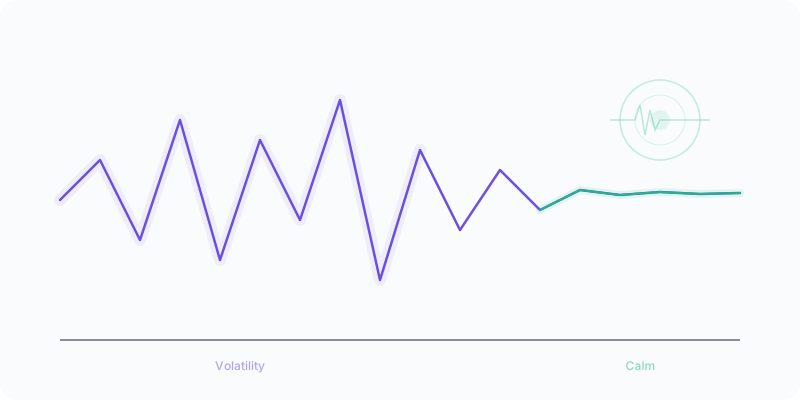
2025 has been a rollercoaster. The S&P 500 is down 8% year-to-date. The VIX (volatility index) has spiked above 30 multiple times. Trade tensions, inflation concerns, and Fed uncertainty have created the kind of market environment that makes checking your 401(k) feel like a horror movie.
Take a breath. Let's talk about what to actually do.
Why Markets Are Choppy
Several factors are colliding:
- Tariff whiplash: On-again, off-again trade policies create uncertainty businesses can't plan around
- Sticky inflation: CPI remains above 3%, limiting the Fed's ability to cut rates
- Earnings pressure: Higher input costs from tariffs are squeezing corporate margins
- Geopolitical tensions: Ongoing conflicts adding to risk-off sentiment
None of this is unprecedented. Markets have faced similar or worse conditions many times and recovered. The key is not timing the bottom—it's time IN the market.
The Math on Missing the Best Days
Here's a statistic that should make you think twice about selling: According to Hartford Funds research, if you missed just the 10 best days in the market over the past 30 years, your returns would be cut in half.
The problem? The best days often come right after the worst days—when fear is highest. Selling after a crash usually means missing the recovery.
What to Actually Do
1. Check your emergency fund. Before worrying about investments, make sure you have 3-6 months of expenses in cash. This is what lets you ride out volatility without being forced to sell at the worst time.
Try the Savings Goal Calculator →
2. Keep contributing. If you're dollar-cost averaging into your 401(k), don't stop. Down markets mean you're buying more shares for the same price. This is a feature, not a bug.
3. Rebalance if needed. If the drop has pushed your stock allocation well below your target, consider rebalancing. This forces you to buy low—counterintuitive but mathematically sound.
4. Tax-loss harvest. If you have losses in taxable accounts, consider selling to realize the loss, then buying a similar (not identical) investment. You get a tax deduction without leaving the market.
Your Retirement Timeline Matters
If retirement is 20+ years away, this volatility is noise. You'll live through multiple bear markets before you touch this money. Stay aggressive.
If retirement is 5-10 years away, you should already have a more conservative allocation. If you don't, consider using this moment to shift some equity to bonds—but don't go all-cash.
If you're already retired, focus on having 2-3 years of expenses in stable assets so you never have to sell stocks during a down year to fund living expenses.
Try the Retirement Calculator →
The Bottom Line
Volatility is the price of admission for long-term stock returns. You can't have 10% average annual gains without periods like this. The investors who win are the ones who stay the course, keep contributing, and resist the urge to check their balance daily. Close the app. Go for a walk. The market will still be there tomorrow.
— Maya Rodriguez